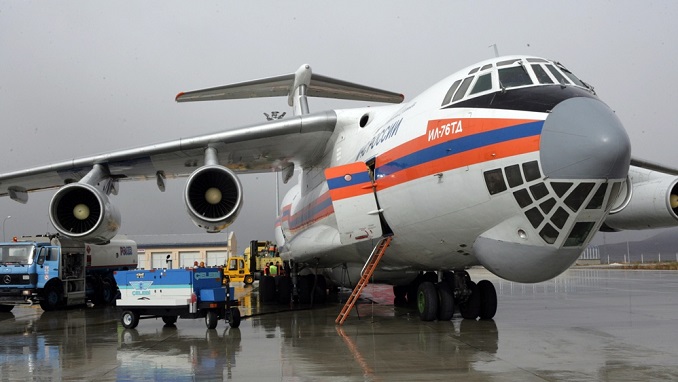
On Sunday, a plane with a volume of 100 tons and 200 pallets of crucial medical supplies and equipment touched down in Kabul, a ReliefWeb press release writes.
Since the beginning of the organization’s initial intervention in 1979, this is the biggest shipment that Première Urgence Internationale has ever received. It is the first fully loaded charter flight that will supply Première Urgence Internationale’s healthcare facilities and individuals it supports with critical medications and medical supplies.
As the bitter winter weather worsens, millions of families are forced into a desperate situation as they try to keep their houses warm and provide for their families. This relief is critically needed. More than half of the population of the country, or almost 23 million people, experience severe food insecurity.
The worst kind of malnutrition might affect one million youngsters. The medications that Première Urgence Internationale acquired today will enable medical personnel to supplement treatment for malnourished children, increasing the likelihood that their nutritional condition will improve quickly and lowering the danger of developing new issues.
The clinics will now have an adequate quantity of medications to appropriately treat such and other ailments because the incidence and severity of respiratory infections have already grown, and the arrival of winter in Afghanistan makes it likely that these will increase even further.
The fixed and mobile medical facilities of Première Urgence Internationale will receive the supplies. More than 476,800 people across four provinces in the east and two provinces in the southeast will receive enough medication and equipment from 69 healthcare facilities—including therapeutic feeding units, first aid trauma posts, and maternal, newborn, and child health departments—and four ambulances. The medical team at Première Urgence Internationale will be able to treat trauma patients, women with young children, and other patients over the ensuing six months.
The majority of the health facilities run by Première Urgence Internationale are found in rural or underserved communities like small towns or villages, where its personnel offers primary healthcare, nutrition guidance, trauma care, maternity and child health, and psychosocial support. For rural and distant areas all around Afghanistan, access to high-quality healthcare continues to be a key challenge. Nearly 70% of the population of Afghanistan lives below the poverty line, putting the country on the verge of economic collapse. Even paying for transportation to the closest medical institutions is beyond the means of the majority of households. People frequently have to travel for several hours to go to health care, sometimes in dangerous situations that put their health at further risk. Première Urgence Internationale’s top priority is to make sure that rural and remote populations in Afghanistan have access to high-quality primary healthcare.