Numerous Chinese firms have already closed for the lunar new year, while US industrial orders in China have decreased by 40%. The slowdown in China is also a result of rising interest rates in the US. Everything points to danger for Mongolia’s economy, bne Intellinews reports.
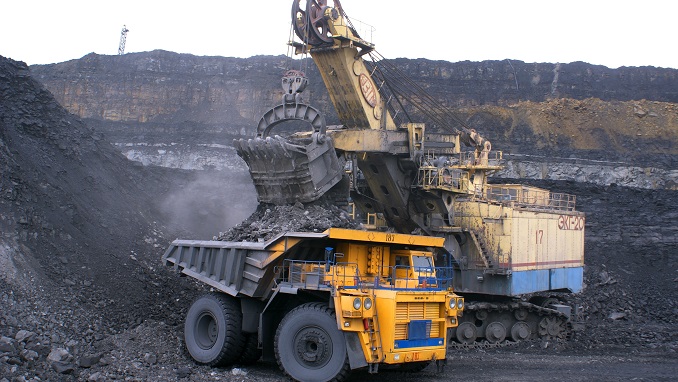
Upwards of 80% of Mongolia’s exports, primarily raw commodities like coal and metals, are bought by China, while over 40% of Mongolia’s GDP is derived on the demand for these basic commodities.
China’s imports are moving lower as a result of Beijing’s “Zero-covid” controls, inflation, rising fuel and transportation costs, and weakening global demand. It’s bad news for the Mongolian economy, which has hardly recovered after almost three years of COVID lockdowns.
In January 2020, the Chinese border was initially closed because of COVID. The closure continued through 2021, limiting exports to and imports into Mongolia. As a result, the GDP of Mongolia contracted by 4.4%.
The Chinese border was generally maintained open in 2022, but due to the global economic climate as well as China’s continued COVID lockdowns, Chinese imports fell by 10.6% y/y in November, the largest drop since May 2020.
Meanwhile, China’s exports decreased 8.7% year over year. China’s manufacturing and export industries are clearly contracting as a result of falling domestic demand there as well as falling demand outside.
Raw material imports are declining as a result of decreased production activity. Due to a lack of internal demand and an inability to export its raw resources, Mongolia’s stocks have grown to 13.4% of its GDP.
The year-to-date shipment of iron ore from Mongolia was down almost 24% as 2022 came to a close. A fall of 14% was seen in gold, close to 50% in petroleum, and 45% in fluorite. The Chinese government frequently funds infrastructure projects while the country’s economy is contracting.
Fluorite, iron, copper, and other building materials become more in demand as a result of them. While new dwelling development has decreased by 40% to 50% since 2021, China’s total construction sector is on the decline.
It is uncertain if China will be able to spend its way out of its current economic position given that Beijing is already saddled with debt that is over 300% of GDP.
Since the spreading of covid began in earnest, freight costs have been increasing. Due to this, Mongolia’s exports are now more expensive, especially coal, which now costs $268 per tonne.
Profits are down in Mongolia as a result of falling commodity prices and increased costs. Additionally, more money is leaving Mongolia than entering due to a decline in exports and an increase in imports from China. As a result, Mongolia’s foreign exchange reserves are steadily decreasing.
In reality, since July 2021, the Bank of Mongolia’s foreign exchange reserves have been declining. They had a 40% decrease in August 2022 compared to 2021.
Mongolia received a $100 million emergency loan from the Asian Development Bank (ADB) in August to aid in navigating the nation’s present economic difficulties. The country already has a foreign debt that is 220% of GDP, therefore this will increase it.
At the same time, the value of Mongolia’s government debt, which was issued as bonds in dollars, is decreasing. The situation was made worse by the fact that the payment of $140 million in national debt was due in December. Mongolia’s debt will need to be serviced for an additional $1.2 billion next year when it matures.